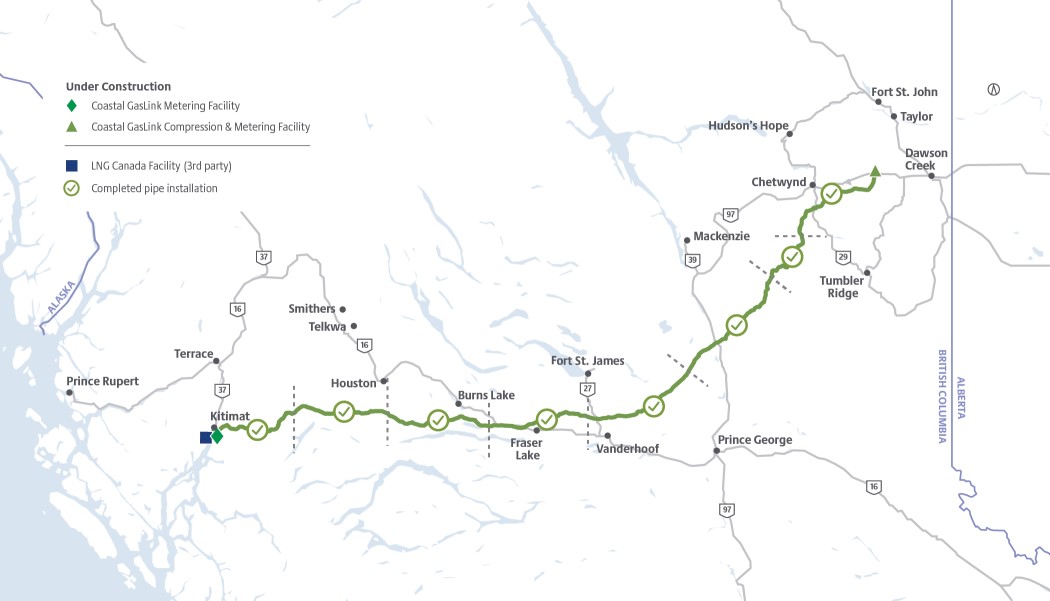
Coastal GasLink (CGL) Phase 2 has received a positive final investment decision, clearing the way for the expansion to move forward. The CGL pipeline currently transports 2.1 Bcf/d (59.4 × 10⁶ m3/d) of natural gas. Phase 2 will nearly double the pipeline’s existing capacity through the addition of new compressor stations and upgrades to facilities along the existing 416-mile (670-km) route from Dawson Creek to the LNG Canada liquefaction facility in Kitimat, British Columbia.
CGL Phase 2 will be delivered through an integrated execution model. Under commercial agreements announced earlier this year, LNG Canada will lead construction as Phase 2 execution manager, while CGL will remain the pipeline’s owner, operator and permit holder. CGL and TC Energy will provide technical advisory and procurement services.
Construction is expected to begin in early 2027, with the expanded system anticipated to enter service in the early 2030s. The Phase 2 infrastructure will be operated by TC Energy, a co-owner of CGL.
“Coastal GasLink pipeline was a nation-building project that established Canada’s first direct path for natural gas to reach global LNG markets and Phase 2 is building on that legacy,” said François Poirier, TC Energy president and chief executive officer. “By nearly doubling the capacity of this world-class infrastructure, we are maximizing the value of this asset, which is underpinned by the Western Canada Sedimentary Basin — one of the most prolific natural gas resource basins on the planet. Phase 2 will strengthen Canada’s role in supplying reliable, affordable and secure energy to global markets while creating long-term value for Indigenous and local communities, customers and shareholders.”