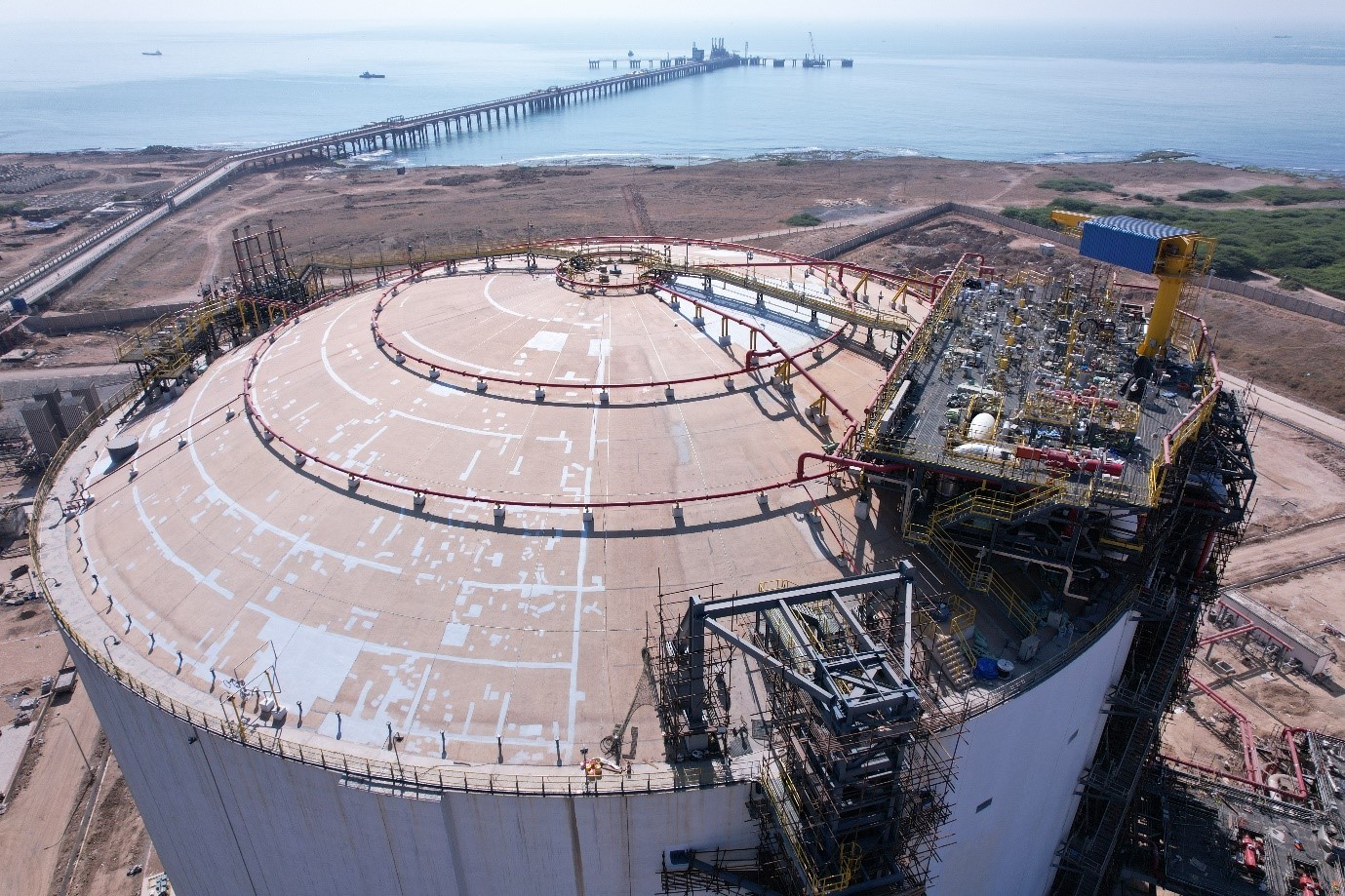
ADNOC Gas plc’s newly signed 10-year, US$4 billion liquefied natural gas (LNG) supply agreement with Hindustan Petroleum Corp. Ltd. (HPCL) comes at a critical moment for India’s gas market, which is entering a period of sustained expansion driven by policy support, infrastructure build-out, and rising energy demand. Under the agreement, ADNOC will supply 0.5 MTPA of LNG from its Das Island liquefaction facility, converting an earlier heads of agreement into a firm long-term sales and purchase arrangement and reinforcing ADNOC’s growing portfolio of contracted LNG volumes serving India.
India’s reliance on LNG is set to increase sharply over the rest of the decade as domestic gas production lags consumption growth. According to the International Energy Agency (IEA), India’s natural gas demand is forecast to rise by nearly 60% by 2030, reaching around 3.64 tcf (103 x 109 m3) per year, with imports expected to more than double to approximately 2.29 tcf (65 x 109 m3) annually to cover the shortfall between domestic supply and demand. In volumetric terms, that translates into LNG imports approaching 48 MTPA by the end of the decade, compared with record imports of about 27 million tonnes in 2024, underscoring why long-term supply contracts such as the ADNOC-HPCL deal are becoming strategically important for Indian buyers.
Government policy is a central driver behind this growth trajectory. New Delhi has set an explicit target to raise the share of natural gas in India’s primary energy mix from roughly 6 % today to 15% by 2030, positioning gas as a transition fuel to support cleaner power generation, urban air quality improvements, and industrial growth. Achieving this target depends heavily on expanding city gas distribution networks, adding CNG stations, and increasing LNG regasification and transmission infrastructure, all of which translate into rising requirements for gas compression across terminals, pipelines, and downstream networks.
For the gas compression sector, India’s LNG outlook has direct implications. The IEA notes that pipeline network expansion of up to 50% by 2030, combined with new LNG import terminals and higher utilization of existing assets, will require significant investment in compression equipment to handle higher throughput and flexible operating profiles. Long-term LNG supply contracts reduce exposure to spot-market volatility, supporting more predictable flows and enabling operators to justify capital investments in compressors, booster stations, and associated gas handling systems.
ADNOC’s broader LNG portfolio reinforces this trend. By 2029, the company expects to operate 15.6 MTPA of LNG capacity, with 3.2 MTPA already contracted to Indian energy companies, positioning the UAE supplier as a long-term stakeholder in India’s gas infrastructure build-out. For India, securing stable LNG volumes aligns with forecasts showing continued growth in gas demand from city gas distribution, refining, and industrial sectors, even as price sensitivity remains a key constraint.
As India moves toward higher gas penetration, agreements such as the ADNOC-HPCL SPA highlight the growing interdependence between LNG supply security and midstream and downstream infrastructure readiness. For compression technology providers, this evolving landscape points to sustained demand for efficient, flexible, and low‑emissions compression solutions capable of supporting India’s ambition to build a more gas‑based energy system over the next decade.