Ebara Elliott Energy (EEE), a subsidiary of Ebara Corp., was awarded an order from Kawasaki Heavy Industries Ltd. to supply specialized liquid hydrogen booster pumps and cryogenic hydrogen return gas blowers for the Liquefied Hydrogen Supply Chain Commercialization Demonstration, a landmark project designed to prove that hydrogen can be produced overseas, liquefied, transported by sea, and delivered to end users at economic scale.
The project is led by Japan Suiso Energy and supported by the New Energy and Industrial Technology Development Organization under Japan’s Green Innovation Fund, with the objective of establishing a repeatable, international hydrogen supply model capable of supporting the country’s 2050 carbon‑neutral target.
The demonstration covers the full hydrogen value chain, beginning with clean hydrogen production in Victoria, Australia, followed by large‑scale liquefaction, marine transport, and import into Japan at the Kawasaki Coastal Area.
Hydrogen is cooled to -426°F (-253°C) to enable liquefaction, dramatically reducing its volume and making long‑distance shipping feasible. The project aims to handle tens of thousands of tons of liquefied hydrogen annually and targets a delivered hydrogen cost of approximately US$0.19/Nm³ by 2030, a benchmark considered essential for widespread industrial adoption.
“This order is a massive leap forward for the global energy transition and showcases our team’s unmatched ability to solve the most complex engineering challenges,” said Shane Reph, chief operating officer of EEE. “By deploying this technology, we are transforming hydrogen into a commercial reality and accelerating the path to a carbon-neutral future.”
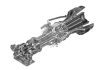
The order includes two mission-critical technologies engineered for extreme cryogenic environments:
- Liquid Hydrogen Booster Pumps: High-pressure centrifugal pumps designed for stable operation at -426°F (-253°C). It ensures a reliable supply of liquefied hydrogen to downstream equipment by increasing pressure from storage tanks to required levels.
- Cryogenic Hydrogen Return Gas Blowers: Sophisticated compressors operating at -400°F (-240°C) that recover and circulate low-pressure gas generated within the facility, maintaining pressure balance in the gas system between onshore facilities and the liquefied hydrogen carrier, including its cargo tanks.
To ensure the long-term reliability essential for global supply chains, EEE and Ebara Corps. are constructing a new, full-scale commercial testing and development center in Futtsu City, Chiba Prefecture. Scheduled for completion in September 2026, this facility is the first of its kind to be equipped with actual fluid test capabilities for liquid hydrogen pumps at scale.

The Liquefied Hydrogen Supply Chain Commercialization Demonstration builds on more than a decade of development under Japan’s Hydrogen Energy Supply Chain program. Early feasibility and technology development began in the early 2010s, leading to a pilot phase that ran from roughly 2015 through early 2022. That pilot culminated in February 2022 with the world’s first successful marine shipment of liquefied hydrogen from Australia to Japan.
In March 2023, following pilot validation, the Japanese government approved the commercialization demonstration under the Green Innovation Fund and formally selected the Port of Hastings in Victoria, Australia, as the export site and the Kawasaki Coastal Area in Japan as the import and receiving site. Detailed engineering, permitting, and procurement progressed from 2023 through 2025, followed by active construction in the mid‑2020s. By 2026, key infrastructure such as the Kawasaki liquefied hydrogen receiving terminal was under construction, with major cryogenic pump and gas compression equipment contracts awarded.
The project is expected to operate through the late 2020s to validate reliability and costs, with the goal of achieving commercially competitive hydrogen supply levels by 2030.