Equinor and its partners have started phase two of Åsgard subsea compression in the Norwegian Sea. The project will help maintain production from the field by increasing the pressure in the pipelines between the wells and the Åsgard B platform.
“In this project, Equinor, together with partners and suppliers, has further developed and qualified the next generation of compressor modules,” said Trond Bokn, Equinor’s senior vice president for project development. “The technology allows us to recover more gas from producing fields. Good resource utilization is important to maintain high and stable production from the Norwegian continental shelf.”

The first plan for development and operation (PDO) of Åsgard was approved in 1996. The field came on stream with Åsgard A in 1999 and Åsgard B in 2000. In 2012, the PDO for Åsgard subsea compression was approved by the authorities, and the first phase of Åsgard subsea compression came on stream in 2015.
This was the world’s first facility for gas compression on the seabed and the result of extensive technological development.
The plans described that there would be a need for increased pressure in the long term to compensate for the pressure drop in the reservoirs. The first compressor module in phase two was replaced in 2023, now the second and final module has been installed, at a depth of 885 feet (270 m).
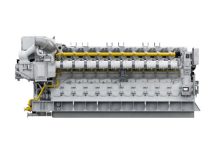
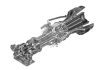
The station consists of two identical Everllence compressor trains operating in parallel, each powered by a compressor with an electric motor capacity of 11.5 MW.
Combined for both phases, the recovery rate from the Mikkel and Midgard fields will increase to 90% due to the compressor plant. This amounts to an additional 306 million barrels of oil equivalent from the fields.