A few years ago, most hyperscalers and data center developers issued grand designs that would achieve net-zero by 2030. The artificial intelligence (AI) race has trumped many of those ambitions.
The same natural gas plants that were strenuously avoided a couple of years ago are now viewed as the speediest route to powering next-generation AI factories.
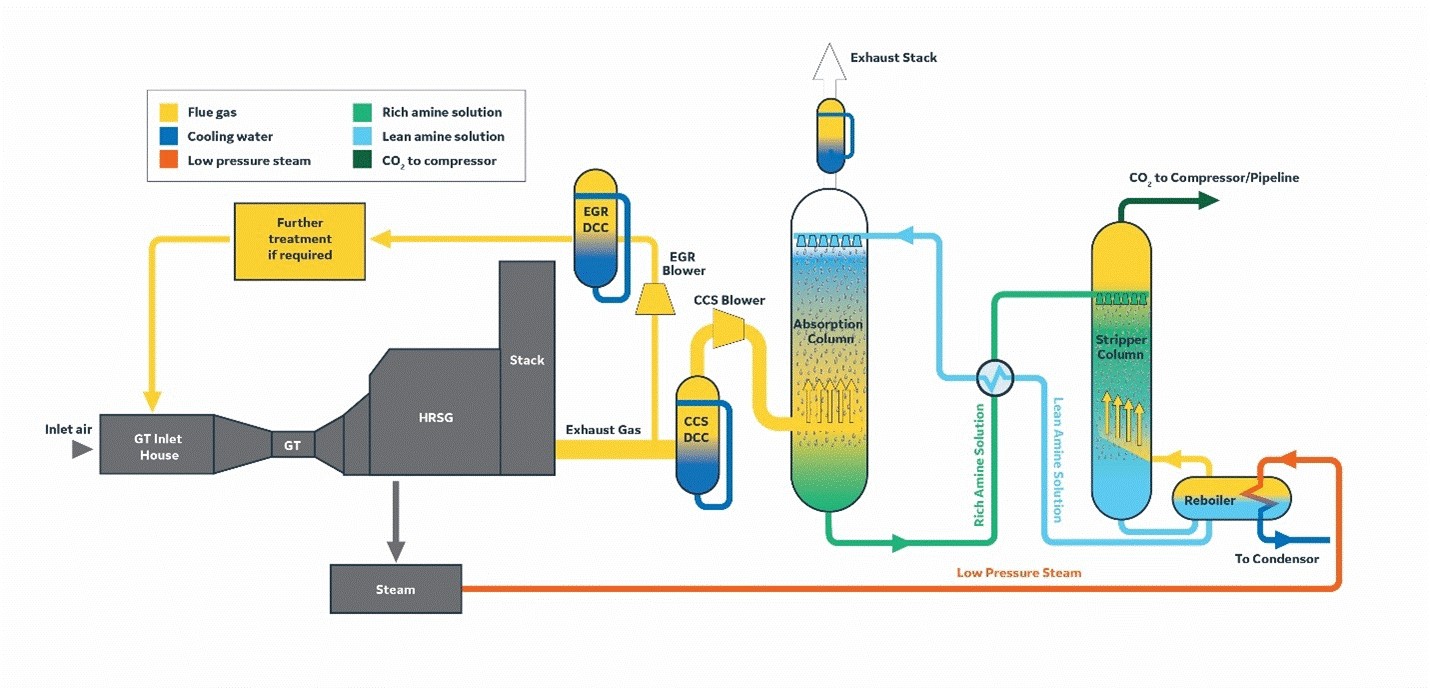
New approaches continue to be devised to unify the needs of immediate power with net-zero goals. A novel way to deliver reliable, low-carbon power at scale is to build combined-cycle gas turbine (CCGT) plants with integrated carbon capture and storage (CCS). Cost, though, remains a concern.
A study by engineering firm Burns & McDonnell estimated combined-cycle capital expenditures (capex) to be between US$1300/kW and US$1800/kW. If you add in 90% carbon capture, capex would more than double.
That’s why Bryan Lofgreen, principal engineer for carbon capture at engineering, procurement, and construction (EPC) firm Kiewit, believes the economics of CCGT+CCS only work when original equipment manufacturers and EPCs collaborate from the start. Thus, his company is partnering with GE Vernova to streamline project development, lower costs, and bring CCS+CCGT projects to market.
Click Here to read the full story in the May issue of Gas Compression Magazine.