Iroquois Gas Transmission System, L.P. (Iroquois) has received a favorable final environmental impact statement from the Federal Energy Regulatory Commission (FERC) for its Enhancement by Compression (ExC) project, located in New York and Connecticut, allowing it to move forward.
The purpose of the ExC project is to facilitate a transition to a renewable energy future, complementing the region’s policy choices while addressing the need for incremental natural gas transportation capacity. The project will meet increased demand due to population and market growth in service territories. It will also take advantage of the affordable cost of delivering natural gas compared to other heating fuels, as well as customer demand associated with meeting the City of New York’s mandated phase-out of No. 4 and No. 6 fuel oils used in fuel boilers. As a result, the ExC Project is compatible with New York State’s recently enacted Climate Leadership and Community Protection Act, which seeks to achieve net-zero greenhouse gas emissions by 2050.
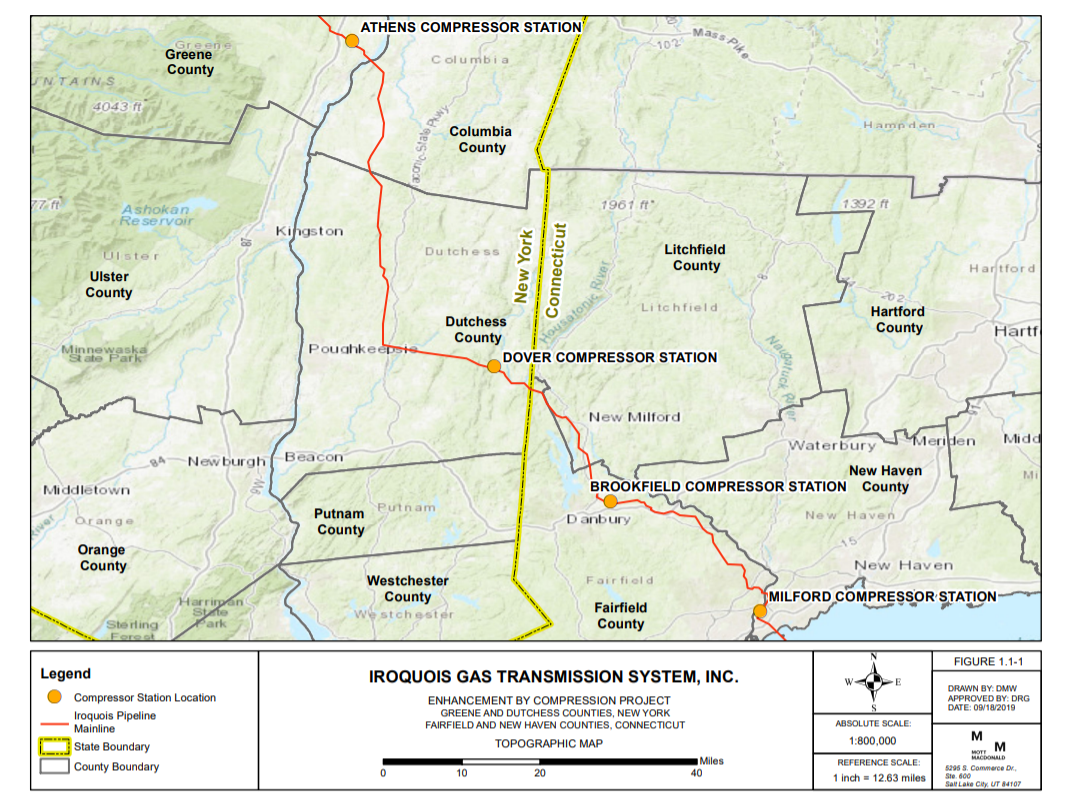
Iroquois proposes this “compression-only” project and wants to construct facilities to provide an additional 125,000 Dth/d of capacity New York. Specifically, Iroquois proposes to construct the following new facilities:
Athens Compressor Station:
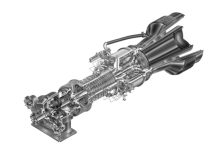
Located in Athens, New York, Iroquois will construct and integrate with its existing Athens Compressor Station (CS) one new 12,000-hp (8948-kW) Solar Taurus 70 turbine with associated cooling, filter separators, and other typical facilities connecting to the Iroquois 24-in. (0.61-m) mainline. This will be in addition to the 10,310-hp (7688-kW) Solar Taurus 70 already in service.
Dover Compressor Station:
In Dover, New York, Iroquois will construct and integrate one new 12,000-hp Solar Taurus 70 turbine unit at its existing Dover CS. This will be an additional compressor, joining the 17,969-hp (13,399-kW) Siemens Cyclone unit already in service. Additional auxiliary equipment associated with the proposed compressor unit include an on-skid turbine compressor enclosure installed in an acoustically designed compressor building; a low-noise turbine exhaust system, including oxidation catalyst housing; a low-noise turbine air inlet system; a low-noise turbine lube oil cooler; a station gas cooler; and aboveground and below grade gas piping.
Brookfield Compressor Station:
Iroquois will construct a control/office building and two new 12,000-hp Solar Taurus 70 turbines associated facilities connecting to Iroquois’ 24-in. mainline in Brookfield, Connecticut. These units will be installed downstream and independent of Iroquois’ existing 7684-hp (5730-kW) Solar Taurus 60 and 10,310-hp Solar Taurus 70 units already in Brookfield CS.
The additional auxiliary equipment associated with the proposed compressor units include on-skid turbine compressor enclosures inside a high performance acoustically designed compressor building, low-noise turbine exhaust systems including oxidation catalyst housing, low-noise turbine air inlet systems, low-noise turbine lube oil coolers installed inside protective buildings, a low noise Unit B-1 & B-2 gas cooler, and aboveground and below grade gas piping.
In addition, Milford CS will undergo certain modifications to the compressor facilities to address noise levels, including replacing the existing exhaust systems for Units A-1 & A-2 with low-noise turbine exhaust systems including oxidation catalysts, adding exterior acoustical insulation to the existing exterior turbine unit air inlet ducting, adding additional piping insulation to the existing station gas piping including piping clamps, and adding one bay of low-noise gas cooling to the Unit A-2 gas cooler.
Milford Compressor Station:
Incremental cooling equipment will be added to Milford CS in Milford, Connecticut, with Iroquois installing new gas cooling equipment to the two existing 10,310-hp Solar Taurus 70 compressor units. Iroquois will add associated piping to allow for compressed discharge gas to be cooled.