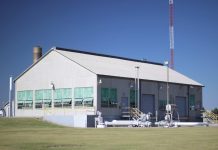
Northern Border Pipeline Co. (Northern Border) has filed an application with the US Federal Energy Regulatory Commission (FERC) to implement its Bison XPress Project. Located in McKenzie, Dunn, and Morton Counties, North Dakota, the proposed project includes the replacement and expansion of compression facilities at Northern Border’s existing Arnegard (No. 4), Manning (No. 5), and Glen Ullin (No. 6) compressor stations.
The project will create 300,000 Dth/d of incremental mainline capacity from receipt points between Northern Border’s Culbertson (No. 3) compressor station and Glen Ullin (No. 6) compressor station to its interconnection with Bison Pipeline LLC in Morton County. The Bison Xpress Project also introduces standby horsepower for the first time on Northern Border’s system, as opposed to the previous single compressor unit design at each station.
Arnegard (No. 4)
Northern Border will increase the total certificated horsepower from 20,000 to 42,964 hp at Arnegard (No. 4) compressor station. Northern Border will replace the existing 20,000 hp Avon gas-fired turbine compressor and install two new 23,470 hp Solar Turbine Titan 130 gas-fired turbine compressors.
Manning (No. 5)
Certificated horsepower at Manning (No. 5) compressor station will increase from 38,000 to 59,978 hp. Station modifications include placing the existing 38,000 hp RB211 gas-fired turbine compressor on standby and installing two new 31,900 hp Solar Turbine Titan 250 gas-fired turbine compressors.
Glen Ullin (No. 6)
Northern Border will increase the total certificated horsepower from 38,000 to 60,684 hp at Glen Ullin (No. 6) compressor station. Modifications include placing the existing 38,000 hp RB211 gas-fired turbine compressor on standby and installing two new 31,900 hp Solar Turbine Titan 250 gas-fired turbine compressors.
Age, utilization, and system criticality are the key factors supporting the replacement of the existing units and ancillary components to ensure the reliability of these stations. At the time of replacement in 2026, all the units will be greater than 28 years of age, with the oldest unit logging 44 years in service.