Everllence will supply two RB compressor skids for Thailand’s first Carbon Capture and Storage (CCS) Project. The units will support PTT Exploration and Production Public Company Limited (PTTEP) in capturing and store up to 1 million tons of CO₂ per year at the Arthit gas field in the Gulf of Thailand.
PTTEP’s investment at Arthit represents Thailand’s first large-scale use of CCS technology and has been recognized as a flagship greenhouse-gas reduction initiative under the Nationally Determined Contribution Action Plan on Mitigation 2021-2030. This project will leverage existing infrastructure at Arthit field while constructing and installing additional facilities as required.
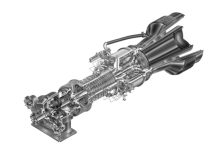
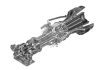
Everllence’s scope of supply comprises two compressor trains based on RB barrel-type compressors for CO2 handling and reinjection. Both units will be driven by gas turbines from Solar Turbines. The equipment will be installed offshore at the Arthit field.
“Radial barrel compressors are designed to deliver high efficiency and reliability in demanding offshore environments,” said Markus Hons, branch manager Thailand at Everllence. “For the Arthit project, we provide a tailored configuration that supports stable long-term CO₂ compression while allowing seamless integration into PTTEP’s existing infrastructure.”
In December, Technip Energies was awarded a detailed engineering contract for PTTEP’s Arthit CCS facilities project by Thoresen Jutal Offshore Engineering Heavy Industries Limited (Thailand). Technip Energies’ scope includes detailed engineering for new CCS processing units and CO2 injection facilities with brownfield modifications to the existing Arthit Central Processing Platform. This award follows Technip Energies’ prior engagement on the project, having successfully delivered both the Pre-FEED and FEED phases between 2022 and 2023.
The Arthit Central Processing Platform is a major natural gas, offshore facility in the Gulf of Thailand operated by PTTEP. It serves as the hub for separating hydrocarbon liquids, gas, and water from surrounding wellheads. Storage operations are scheduled to begin in 2028.