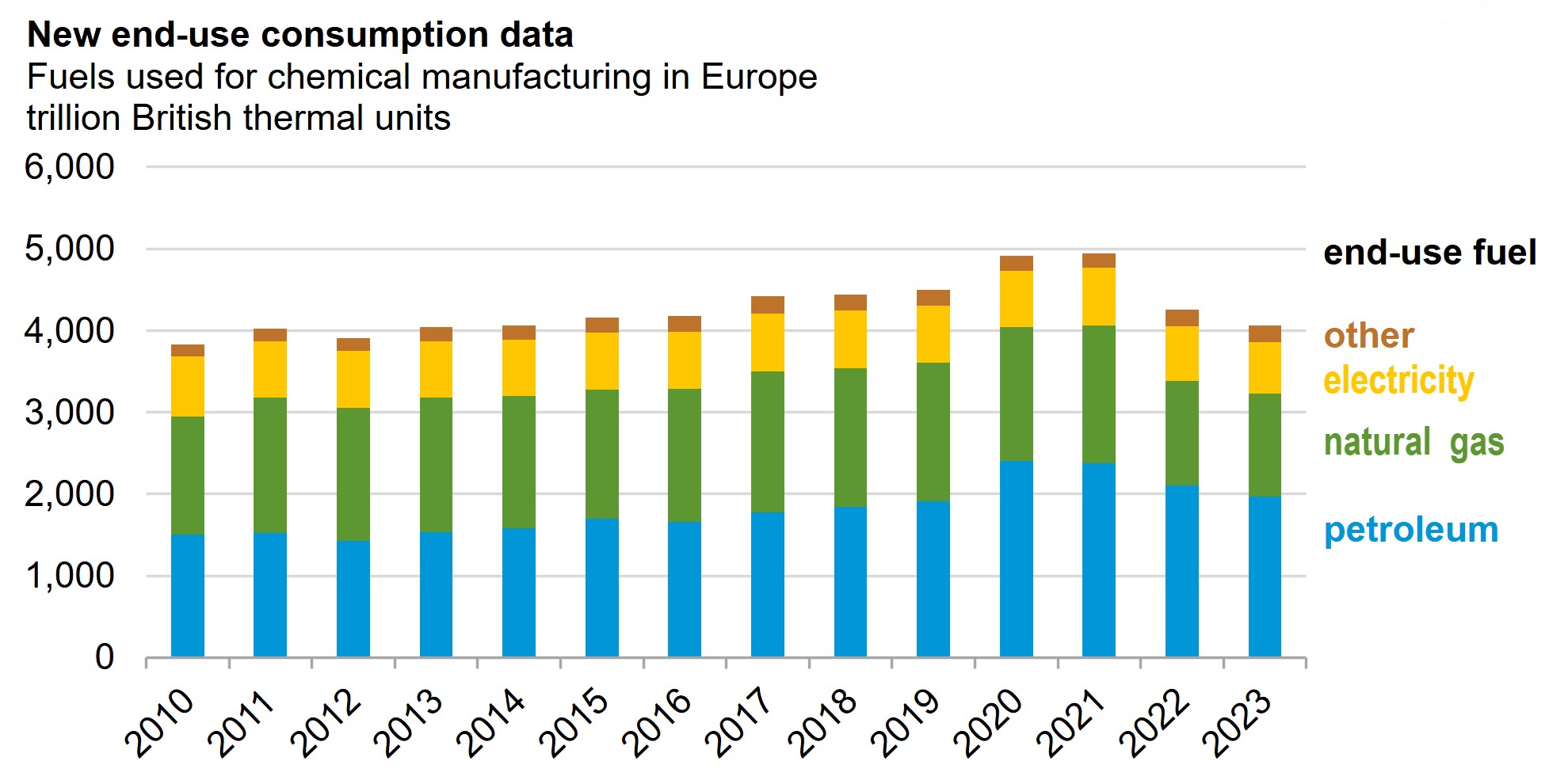
The US Energy Information Administration (EIA) has released a new international dataset containing end-use consumption data for most countries of the world, with annual data through 2023. The new data set disaggregates the existing total international consumption values into up to 34 end-use sub-sectors, such as construction, mining, refining, residential, and commercial. Its end-use data set categorizes end-use consumption by region, country, fuel, sector, and sub-sector in which the energy is consumed. In the example above, the EIA breaks down the fuels used in Europe to produce chemicals.
Its new end-use data fulfill the requirement under Section 40416 of the Infrastructure Investment and Jobs Act, to provide “detail on energy consumption by fuel, economic sector, and end use within countries for which data are available.” The EIA will update this new international end-use dataset annually.
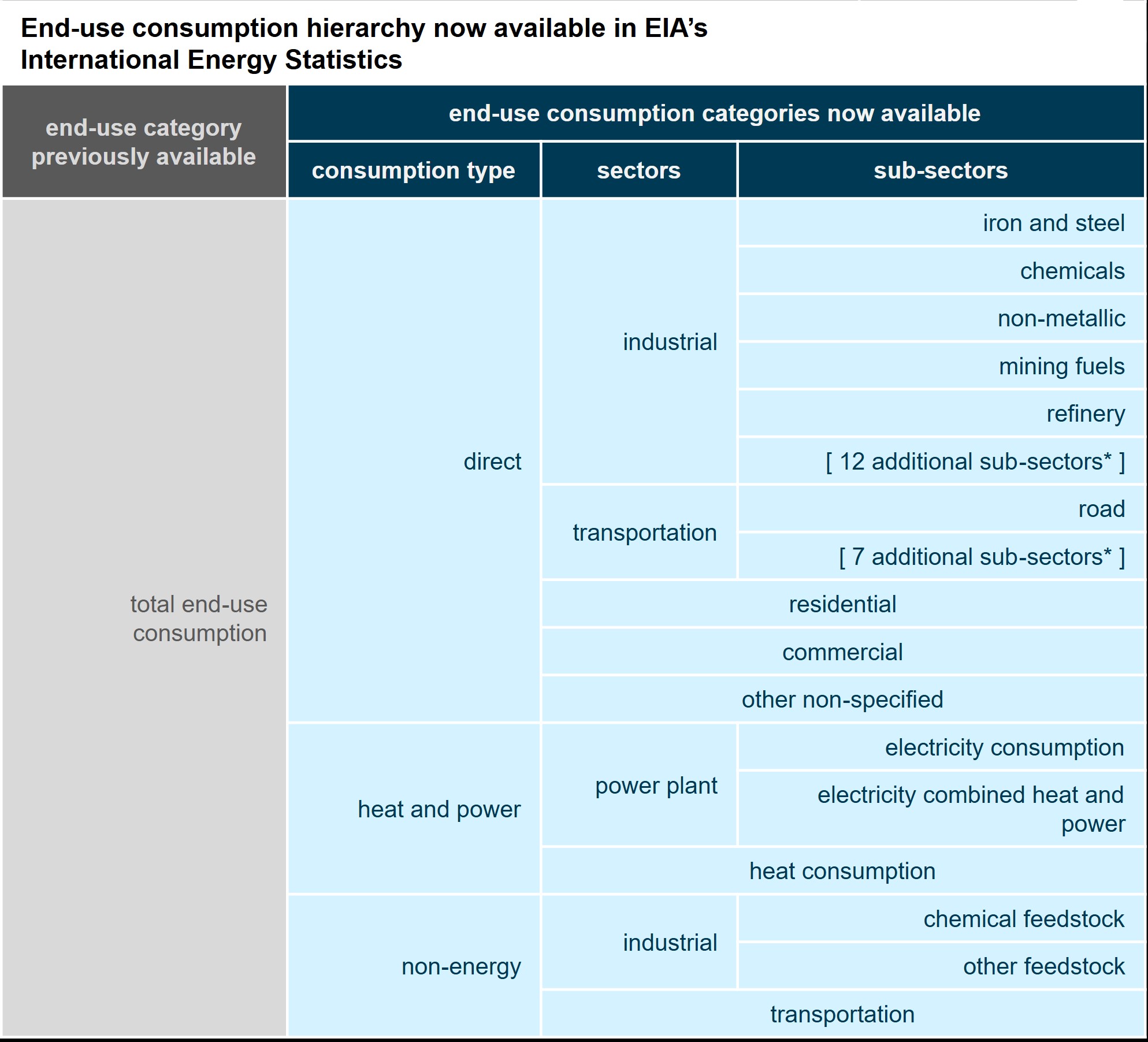
The EIA designed the end-use dataset to align with the World Energy Projection System (WEPS). In its end-use data, the EIA assigned energy sources into one of six groups (petroleum, coking coal, natural gas, other energy for power and heat, steam coal, and electricity) to align with design of the WEPS demand modules as shown in the figure below. Electricity is distinct from the other categories because it is created as a secondary energy source in one of the power plant sub-sectors, after which it flows to final consumption in other end-use sectors.
The EIA also categorized the type of consumption as direct, heat and power, or non-energy. Out of those categories, data were classified by sector and then further by subsector.
Data Values: End-use Consumption Data
How Values Were Computed
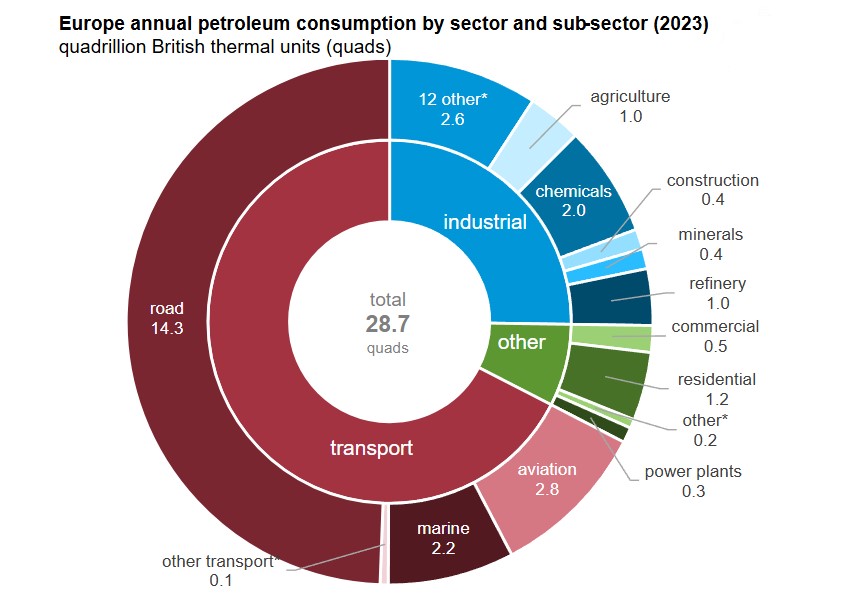
Total consumption values for each energy source were taken from the EIA’s International Energy Statistics (IES) database and broken out for each end-use sector based on shares estimated from the International Energy Agency’s extended World Energy Balances. In the example below, petroleum fuel used in Europe for chemicals in 2023 was 6.8% of total petroleum used.
Data Values: End-use Consumption Data
Some energy sources require tracking through their derivative sources to allow the EIA to allocate them appropriately to end use. For example, the energy values in metallurgical coal are split into four distinct energy sources in its dataset: metallurgical coal, metallurgical coke, manufactured gases, and coal tar. So, to match the total energy in IES metallurgical coal you must add all reported derivative sources together.