Tres Palacios has requested US Federal Energy Regulatory Commission (FERC) authorization to construct, operate, and maintain the Tres Palacios Smith Cavern Expansion Project. The project will expand the certificated natural gas storage capacity of the existing Tres Palacios storage facility by converting three existing brine caverns into natural gas salt dome storage caverns (Smith Caverns 5, 6, and 7), and includes related pipeline looping, compression, gas dehydration, metering, and appurtenant facilities in Matagorda and Wharton Counties, Texas.
The purpose of the project is to add approximately 24.8 bcf (702.2 4 x 10⁶ m3) of new working gas capacity and increase injection capabilities at the Tres Palacios Gas Storage Facility. The project is needed to meet the specific needs of the project shippers and additional storage capacity required for the continued and growing demand for additional firm storage services, withdrawal flexibility, system reliability needs, and enhanced deliverability in the Gulf Coast region. The Tres Palacios Gas Storage Facility sits at the intersection of multiple major long-haul interstate pipeline systems and major Texas intrastate pipelines in Matagorda County, making it a critical node for supply and demand balancing across the Gulf Coast.
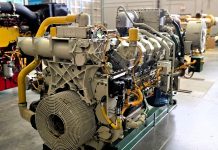
The project includes 5.4 miles (8.6 km) of new 36-inch (91-cm) pipeline loop; three 1.7 mile long (2.7 km), 16-inch (40-cm) pipeline cavern laterals; the new greenfield El Campo Compressor Station, including four new 5500 hp (4103 kW) reciprocating compressor units with associated compression equipment and associated two pipeline interconnects; additional facilities at the existing Tres Palacios Gas Storage Facility including three new 5500 hp reciprocating compressor units, a new compressor building, six cooling bays, and a new gas dehydration system; and modifications at three existing metering and regulation stations.
The Tres Palacios Smith Cavern Expansion Project will increase Tres Palacios’ maximum design storage capacity from 63.6 bcf (1.8 x 10⁹ m3) to 97.3 bcf (2.7 x 10⁹ m3), as well as an incremental 650 MMcf/d (18.4 x 10⁶ m3/d) of injection capability for a total of 1650 MMcf/d (46.7 x 10⁶ m3/d) of injection capability.